At East to West Consulting, we understand that modern industrial operations require more than traditional treatment methods. As industries face increasing pressure to reduce operating costs, improve sustainability, and maintain consistent process performance, advanced technologies are becoming an essential part of water treatment optimization.
Artificial intelligence (AI), automation, and data-driven process monitoring are transforming how industries manage their water treatment systems. By combining engineering expertise with intelligent process control, facilities can improve efficiency, reduce waste, and make better operational decisions.
Smarter Process Control Through Data-Driven Optimization
Industrial water treatment has always relied on operator experience and process knowledge. However, modern systems now allow facilities to collect and analyze large amounts of operational data to identify trends, improve performance, and prevent issues before they occur.
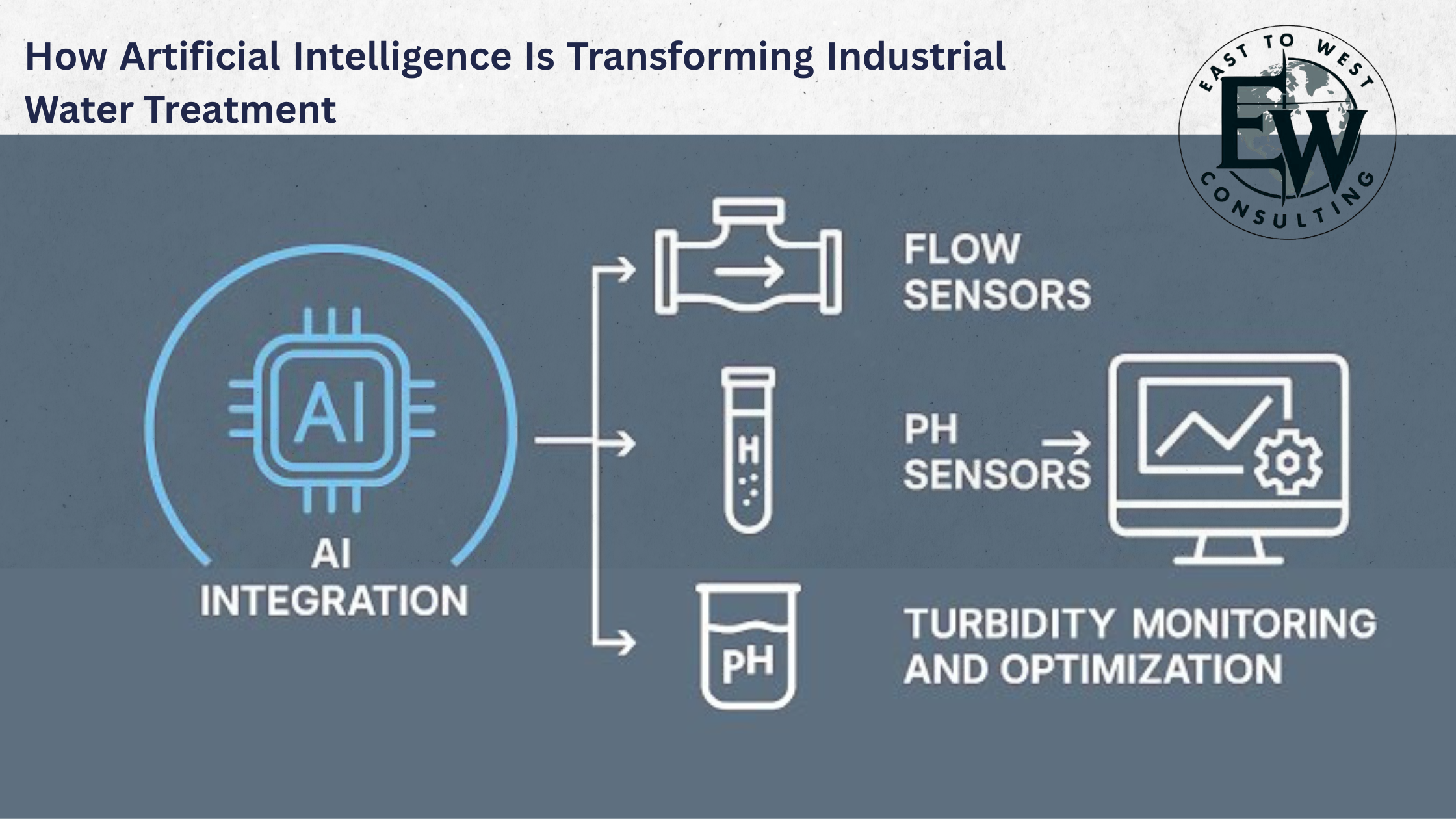
AI-driven monitoring systems can analyze key process parameters such as:
- Flow variations
- Chemical consumption
- Water quality parameters
- Equipment performance
- Historical operating conditions
This information allows operators and engineers to make informed decisions based on real-time process conditions rather than reacting to problems after they occur.
Improving Chemical Efficiency and Reducing Operating Costs
Chemical treatment is a critical part of many industrial water treatment processes, but inefficient dosing can lead to unnecessary costs and reduced performance.
Incorrect chemical application can result in:
- Increased chemical consumption
- Higher sludge production
- Poor separation performance
- Unstable water quality
Through improved monitoring and process optimization, facilities can better understand the relationship between water characteristics, chemical selection, dosage requirements, and treatment results.
The goal is not simply to increase chemical usage—it is to apply the right chemistry, at the right dosage, under the right operating conditions.
At East to West Consulting, we help customers optimize their treatment processes by combining engineering knowledge, specialty chemical solutions, and practical operational experience to improve efficiency and reduce unnecessary costs.
Optimizing Equipment Performance and Reliability
Artificial intelligence and automation can also improve the performance of industrial treatment equipment.
Technologies such as:
- Pumps
- Mixers
- DAF systems
- Filtration equipment
- Dewatering systems
- Sludge drying systems
can benefit from continuous monitoring and process optimization.
By identifying changes in operating conditions early, facilities can reduce:
- Unexpected downtime
- Maintenance requirements
- Energy consumption
- Production interruptions
This creates more reliable treatment systems and helps extend equipment lifespan.
Supporting Sustainable Industrial Operations
One of the biggest advantages of smarter water treatment management is the ability to improve sustainability while reducing operational costs.
Optimized processes can help reduce:
- Freshwater consumption
- Chemical waste
- Energy usage
- Sludge generation
- Transportation requirements
When combined with advanced sludge drying technologies and lower-carbon chemical solutions, intelligent process optimization can significantly reduce the environmental impact of industrial operations.
The Future of Industrial Water Treatment
Artificial intelligence will not replace engineering expertise—it will enhance it.
The most successful treatment systems combine:
- Experienced engineers
- Reliable equipment
- Advanced chemistry
- Process monitoring
- Continuous optimization
At East to West Consulting, we focus on delivering practical process engineering solutions that improve industrial performance, reduce costs, and support more sustainable operations.
By combining technology, engineering expertise, and process optimization, we help industries move toward a smarter and more efficient future.
Leave a Reply